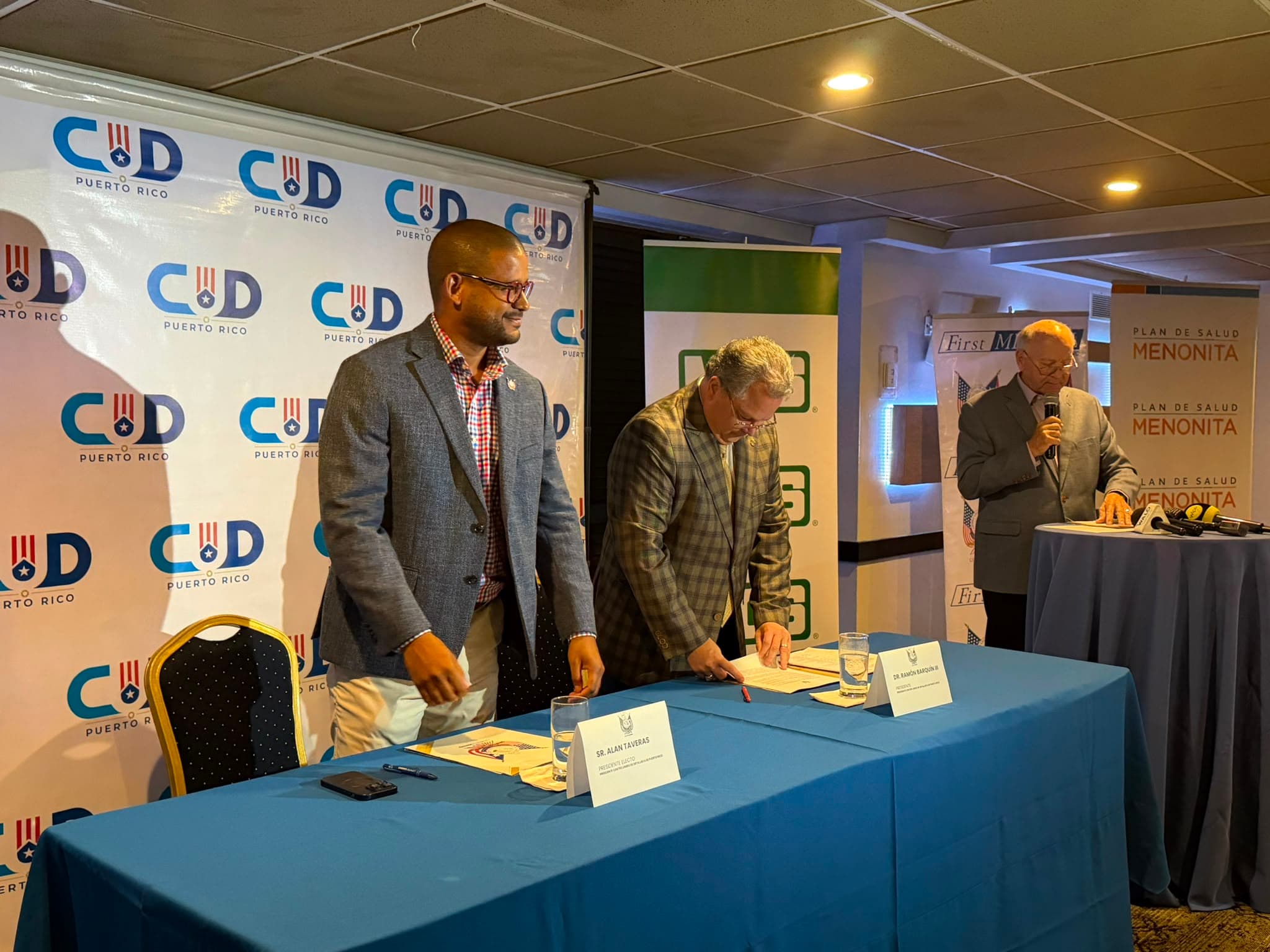
The president of Puerto Rico’s largest small-business organization urged the government and private sector Tuesday to pivot toward deeper commercial integration with the Caribbean, arguing that the island’s economic future cannot depend solely on attracting investment from the U.S. mainland.
As Centro Unido de Detallistas (CUD) President Ramón C. Barquín III delivered his message, Gov. Jenniffer González-Colón traveled to New York to appear on NYSE Live and pitch Puerto Rico as, in her words, “open for business” for U.S. investors.
While announcing the association’s 2026 Annual Convention, Barquín said Puerto Rico must “open markets” and diversify beyond the traditional focus on the mainland, insisting that the most immediate and attainable growth opportunities lie in the Caribbean basin.
A central feature of the convention will be the “Caribe Unido” conference, a forum designed to formalize and expand commercial ties across the region. According to CUD, representatives from Colombia, Costa Rica, the Dominican Republic, Venezuela, El Salvador and Panama will participate, along with figures linked to regional economic development initiatives such as the Proyecto Hostos.
He noted that intra-Caribbean trade remains below 3%, concentrated almost entirely between Puerto Rico and the Dominican Republic, a gap he believes the island can help close.
For context, even the Caribbean Community’s own internal trade among its 15 member states, a bloc built explicitly around regional economic integration, has hovered between 12% and 16% in recent years, according to CARICOM’s own data, well below the roughly 23% intra-regional trade rate within Southeast Asia’s ASEAN bloc and more than 60% within the European Union. By that standard, Puerto Rico’s commercial ties to its own region are thin even by the region’s own modest norms.
Barquín argued that Puerto Rico’s economic model has leaned too heavily on attracting large U.S. manufacturers, even though the backbone of the island’s commercial ecosystem is made up of micro, small and mid-sized businesses. Strengthening regional supply chains, he said, would allow those firms to export, find suppliers and expand more realistically than competing with U.S. jurisdictions that offer aggressive incentives.
He emphasized that the Caribbean, Central America and northern Latin America represent natural commercial partners for Puerto Rico, citing opportunities with the Dominican Republic, Panama, Costa Rica, Colombia, El Salvador, Venezuela and Jamaica.
From a retailers’ group to Puerto Rico’s pymes backbone
CUD, whose name still reflects its 1891 founding as an association of retail merchants, has for decades represented small and mid-sized businesses across virtually every sector of the Puerto Rico economy, not retail alone.
More than 5,000 businesses are affiliated with the organization today, and CUD says a large and growing share of its membership is now self-employed professionals and service providers rather than storefront retailers, a shift that mirrors the broader transformation of Puerto Rico’s small-business sector over the past generation.
The pymes sector, in fact, is not a peripheral part of the island’s economy. Small, midsize and micro enterprises generate close to 92% of private-sector employment in Puerto Rico and contribute roughly 12% of gross domestic product, according to Perfil de las Pymes en Puerto Rico 2025, a study CUD conducted with the Universidad del Sagrado Corazón and released earlier this year.
Nearly 74% of the businesses surveyed operate with 10 employees or fewer, underscoring how much of the island’s commercial activity runs through very small operations rather than large employers.
The same study points to exactly the kind of modernization gap Barquín raised in his remarks. Roughly 64.5% of pymes generate less than 10% of their sales through digital channels, and only a small fraction have real e-commerce capability rather than a social media presence.
On the other hand, 63.1% of pymes reported having the capacity to sustain operations through disruptive events, a form of resilience Puerto Rico’s business community has built through repeated hurricanes, earthquakes and grid failures.
CUD’s 2026 Convention and Annual Assembly will take place Sept. 10-13 at the Wyndham Río Mar Beach Resort & Spa as part of the organization’s 135th anniversary. The event will gather retailers, professionals, municipal leaders and international business figures for four days of educational forums, mentorship sessions, networking activities, a golf tournament, and the association’s annual assembly and elections.
The convention will also include more than 70 exhibitors open to the public at no cost, legal and business education sessions, panels on artificial intelligence, and evening events such as the “Sunset at the Paradise” reception and the Cherryblossom Gala and Premios Mercurio.
Separately, a shared list of obstacles
Barquín used the occasion to reiterate CUD’s policy priorities, which he described as also essential for improving Puerto Rico’s competitiveness.
He said the repeal of the inventory tax remains a top objective, noting that the levy distorts supply chains and places local businesses at a disadvantage. He also called for a comprehensive overhaul of the permitting system, arguing that bureaucratic delays and inconsistent enforcement continue to hinder investment and expansion.
In addition, he pressed for substantive reform of labor laws, saying Puerto Rico must modernize its regulatory framework to reflect global economic realities and avoid imposing costs that would make local firms uncompetitive with regional counterparts.
Throughout his remarks, Barquín acknowledged that Puerto Rico faces structural challenges, including fragile infrastructure, recurring utility disruptions, and demographic pressures. But he insisted that the island must adopt a broader economic vision that embraces regional integration, supports small and mid-sized enterprises, and positions Puerto Rico in a globalized commercial landscape rather than relying solely on U.S. capital flows.