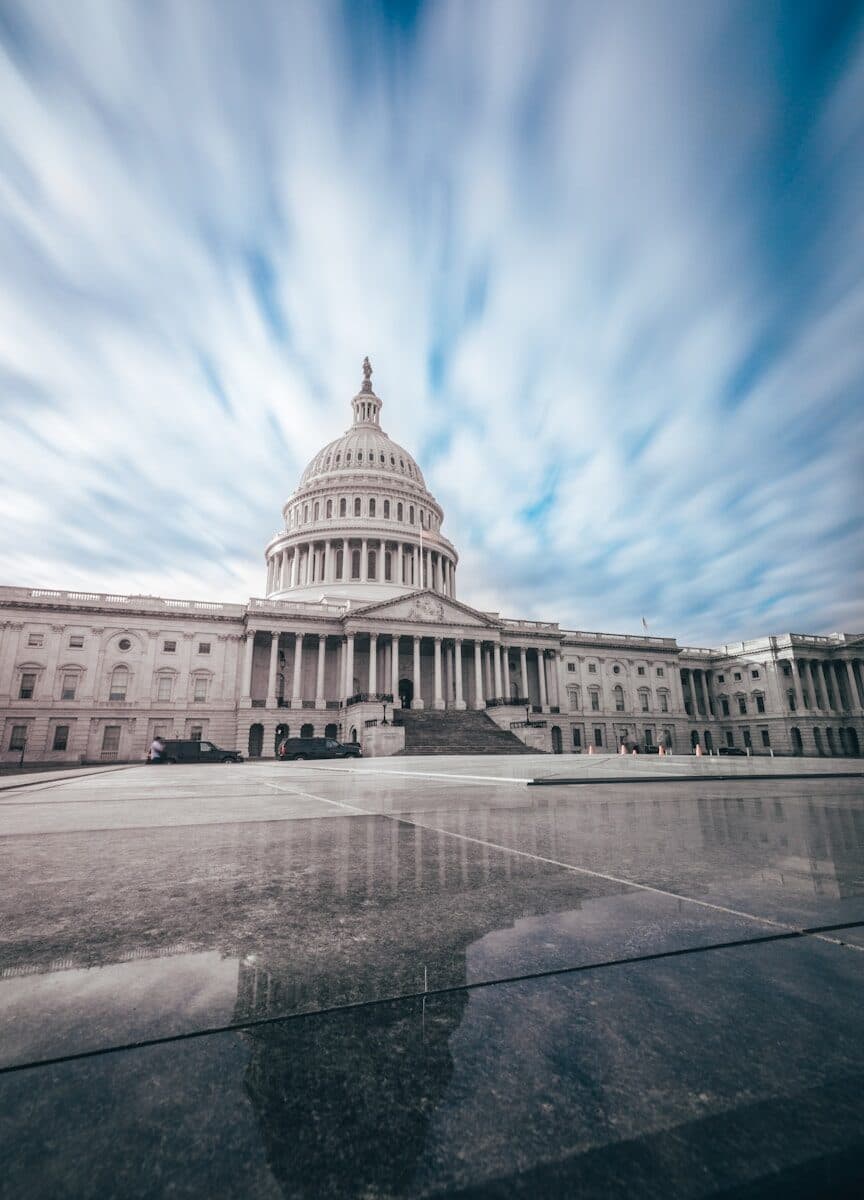
After months in committee, the Senate is poised to consider the Digital Assets Market Clarity Act, or Clarity Act, which seeks to create greater regulation for cryptocurrencies. The Senate Banking Committee announced a markup hearing for today, Thursday, May 14, at 10:30 am with the aim of holding a final debate on the bill and […]
After months in committee, the Senate is poised to consider the Digital Assets Market Clarity Act, or Clarity Act, which seeks to create greater regulation for cryptocurrencies.
The Senate Banking Committee announced a markup hearing for today, Thursday, May 14, at 10:30 am with the aim of holding a final debate on the bill and a vote on it in the full Senate before the end of May, announced Republican Senator Tom Tillis.
Leading up to the markup hearing, the Senate banking committee published a new 309-page draft that addressed one of the major points of contention, which is the rewards that custodial institutions can give to stablecoins, which are cryptocurrencies whose value is pegged to a fiat currency such as the dollar.
Among the most significant points of contention between traditional banking and the decentralized finance sector or DeFi, as the world of cryptocurrencies is also known, are the benefits that entities can offer to people who hold stablecoins.
The bill now stipulates that crypto institutions that act as custodians of their clients’ stablecoins—in the same way that banks act as custodians of their clients’ deposits—cannot offer benefits similar to the interest generated by deposit accounts in banks. However, the measure would allow for other types of incentives or returns to be granted to stablecoin holders.
The bill still addresses its original intent, which is to establish jurisdictional guidelines between the Securities and Exchange Commission (SEC) and the Commodity Futures Trading Commission .
The measure also regulates other aspects of blockchain, the technology on which cryptocurrencies run, but lacks ethical provisions, as some Democratic members of Congress had requested. It is this lack of ethics as well as some shared concerns with the banking sector that led to some Democratic senators presenting last minute amendments to the bill.
Although there are some detractors within the Democratic Party, the bill does have bipartisan support, as seen with Democratic Senator Angela Alsobrooks, who defended the measure.
Among the measure’s defenders is also SEC Chairman Paul Atkins, who argued, “The experience of the offshore growth and implosion of FTX demonstrates the folly of pretending that Americans will not be harmed if we do not address innovative technologies and thereby force them offshore.”
The AARP, which is an interest group representing people 50-years or older, has emerged as an unlikely defender of the Clarity Act. In a letter sent to the Senate Banking Committee, the AARP argued that the lack of legislation is leaving unprotected senior people that are falling from crypto-related scams.
“Section 205 of the legislation takes a critical step toward protecting older Americans from one of the fastest-growing and most devastating fraud vectors in the country today,” the letter reads. “Cryptocurrency kiosks have become criminals’ tool of choice for stealing from older adults.”
No consensus between Banks and DeFi
Within the crypto world, there are conflicting concerns. On one hand, a grievance for cryptocurrency proponents during President Joe Biden’s administration is that the lack of regulation led to the arbitrary implementation of rules through SEC lawsuits. On the other hand, there is a concern that excessive regulation will eliminate the decentralized nature of blockchain processes.
Internal debates aside, many users and more institutional sectors of the decentralized finance sector or DeFi, have shown support for the legislation. Two top executives from Coinbase, one of the largest cryptocurrency exchange platforms, used the X platform (formerly Twitter) to defend the measure.
Brian Armstrong, the CEO of Coinbase, has been meeting with legislators and regulators, and on Wednesday morning, he uploaded a video describing the markup hearing as historic.
Coinbase’s Chief Public Policy Officer, Faryar Shirzad, used his platform to attack bank partnerships, labeling them as lacking credibility, and to defend the markup view.The cryptocurrency sector’s anger with banking associations stems from their understanding that the amendments to limit the profits that stablecoins can generate address the main concern expressed by banks: the flight of deposits.
In a press release, several banking associations reiterated their concerns about the possibility that increased use of stablecoins could lead to a flight of deposits from traditional banks.
“Senators Tillis and Alsobrooks are seeking to achieve the correct policy goal – prohibiting the payment of yield and interest on stablecoins; however, the proposed language falls short of that goal. It is imperative that Congress get this right,” according to a press release from the American Banking Association, the Banking Policy Institute, the Consumer Banking Association, the Financial Services Forum, and Independent Community Banks of America.
The statement refers to an article by economist Andrew Nigrinis, who argues that the drop in deposits would cause a ripple effect that would impact banks’ lending capacity.
If the Clarity Act passes the markup hearing, it still needs a vote in the Senate and a conference between the two Legislative houses to vote on a final version of the bill before it heads to President Donald Trump’s desk, but Republican senators have indicated that they expect the bill to become law by next month.