In healthcare, sustained investment is no longer simply a growth strategy, but a requirement for remaining competitive and delivering world-class care. Hospitals must acquire advanced equipment, modernize their facilities and, just as importantly, maintain a deep pool of physicians, nurses, technologists and other specialized professionals.
Grupo Hospitalario is pursuing those priorities across a network that includes Manatí Medical Center, Bayamón Medical Center, Mayagüez Medical Center, Puerto Rico Children’s Hospital and other healthcare facilities. The group has already invested more than $100 million throughout the system, with approximately $150 million in additional projects planned for the next two to three years.
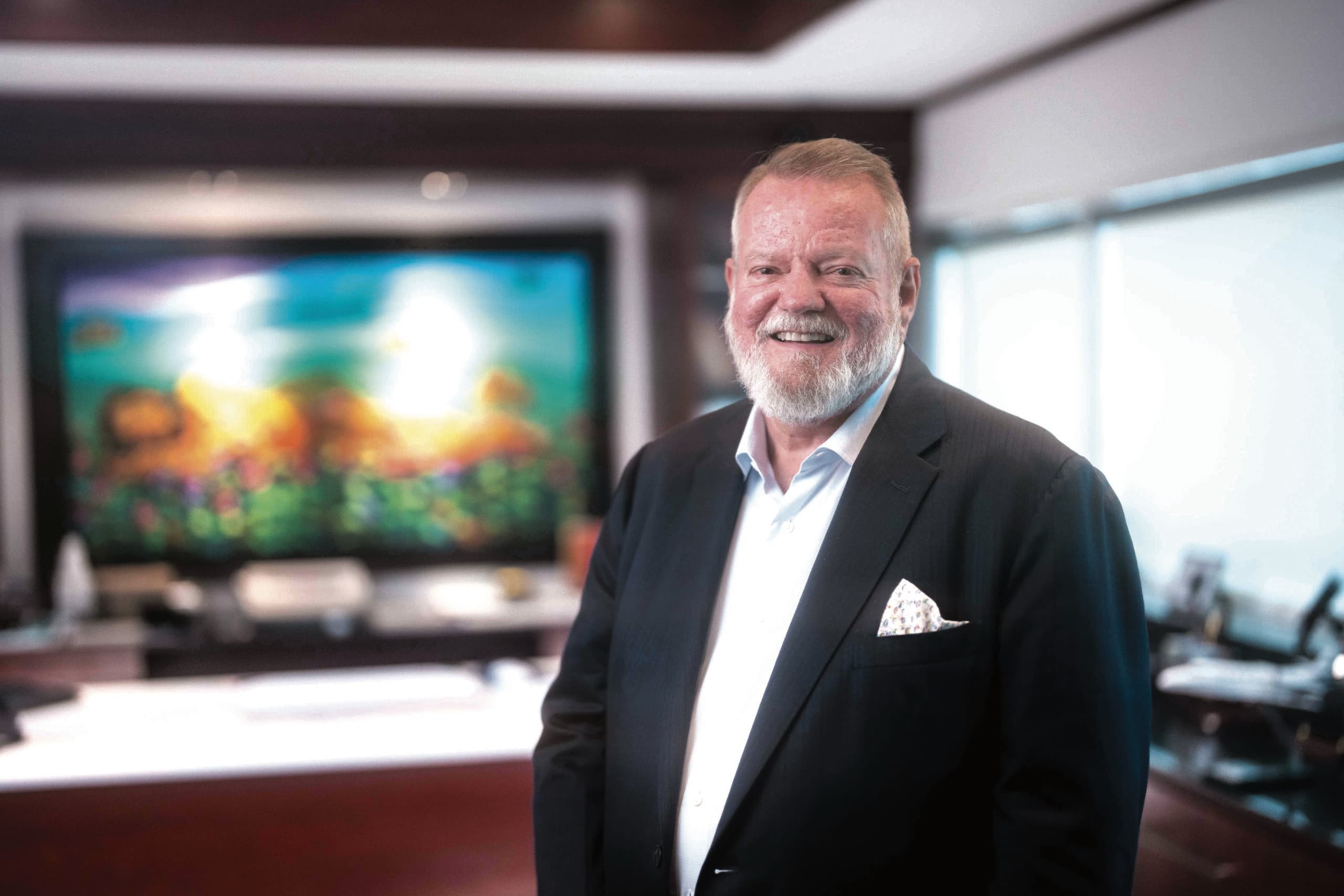
For José L. Quirós, Chairman and CEO of Grupo Hospitalario, the principle is straightforward: hospital investment never ends. As medicine becomes more specialized and technology-intensive, healthcare organizations must continually strengthen both their physical assets and their knowledge base.
The objective is not merely to own the newest technology. Grupo Hospitalario uses capital investment as a recruitment and retention tool, particularly for Puerto Rican physicians who trained or established practices on the mainland.
“Many younger surgeons and specialists have trained with robotic platforms, artificial intelligence and sophisticated image-guidance systems,” Quirós said. “Returning to Puerto Rico can be professionally frustrating if that equipment is unavailable.”
“The underlying wager is that investment in Puerto Rico’s medical talent will generate long-term value.”
José L. Quirós, Chairman and CEO, Grupo Hospitalario
Grupo Hospitalario’s strategy is to remove that obstacle. When a physician identifies a needed procedure or technology, hospital management evaluates the request and attempts to respond quickly enough to make the case possible. The acquisition of a NeuroNavigator for neurosurgical procedures illustrates the approach. The image-guided navigation technology provides surgeons with real-time surgical guidance and can cost between $1 million and $2 million.
“If the physician needs it to provide the best service to patients, it is my job to make that a reality,” Quirós said. “We’re always looking for the latest and greatest.”
Major investments
Medical innovation and specialized talent increasingly move together. Manatí Medical Center illustrates this model through its neurosurgical practice anchored by Dr. Jorge Lastra, Dr. Marcos Mercado and Dr. David Lozada, whose expertise allows the hospital to address increasingly complex neurological conditions. The hospital is also developing a strong gastroenterology platform with subspecialists including Dr. Nelson Valentín Feliciano, who practices neurogastroenterology focusing on interactions between the nervous and digestive systems, and Dr. Fray Arroyo Mercado, who specializes in interventional gastroenterology.
Manatí recently performed its first radiofrequency ablation procedure to treat Barrett’s esophagus with dysplasia, a precancerous condition. The procedure uses controlled thermal energy to eliminate abnormal tissue. From a business standpoint, introducing this type of service represents more than purchasing a device: it requires a trained physician, an experienced clinical team, properly equipped procedure rooms and the operational capacity to support follow-up care.
The network includes Manatí Medical Center, Bayamón Medical Center, Mayagüez Medical Center, Puerto Rico Children’s Hospital and other healthcare facilities.
Grupo Hospitalario has made a similar commitment to robotic surgery. The organization has invested approximately $3 million in each of five Da Vinci systems—two in Bayamón, one each at Puerto Rico Children’s Hospital, Manatí and Mayagüez—for a total of about $15 million. The platforms enable surgeons to perform precise, minimally invasive procedures and can support shorter recoveries in appropriately selected cases. Strategically, they also help Grupo Hospitalario attract surgeons who have already trained with robotic technology in the United States.
The organization has also invested more than $11 million in advanced MRI and CT equipment with artificial-intelligence capabilities. These systems are part of approximately $25 million in financing secured throughout the hospital network. At Mayagüez Medical Center San Antonio alone, an initial $10 million helped rehabilitate facilities, modernize patient rooms and open a pediatric intensive care unit.
Facing capital challenges
The strategy nonetheless carries financial and operational risks. New procedures are sometimes denied by health plans as “experimental,” Quirós noted, even when they are already in established use elsewhere in the United States. Delays in federal recovery funding create another obstacle.
Grupo Hospitalario ultimately used private capital to expand Bayamón Medical Center’s emergency department after CDBG funding became stalled in the government process. Banks have also become more conservative about financing large healthcare projects.
Yet delaying investment presents its own risks: losing physicians, surgical cases, emergency-room visits and patient volume to better-equipped competitors or to institutions outside Puerto Rico.
“Investment must also extend beyond equipment,” Quirós explained. “New technology requires specialized nursing, technologists, operating-room teams, quality personnel and infection-prevention professionals. Projects must comply with Puerto Rico Department of Health regulations, Medicare requirements and Joint Commission accreditation standards.”
For Grupo Hospitalario, these are interconnected parts of a business model designed to sustain clinical quality that is first-in-class.
“The underlying wager is that investment in Puerto Rico’s medical talent will generate long-term value,” Quirós said. “By giving physicians the technology and support they need to practice at the highest level, Grupo Hospitalario aims to keep more complex care, and more Puerto Rican doctors, on the island.”
During his seven-year presidency, the BSN grew from nine teams to 12, turned a pandemic-era scramble into a self-sustaining business, and landed its first U.S. broadcast deal with NBC Sports