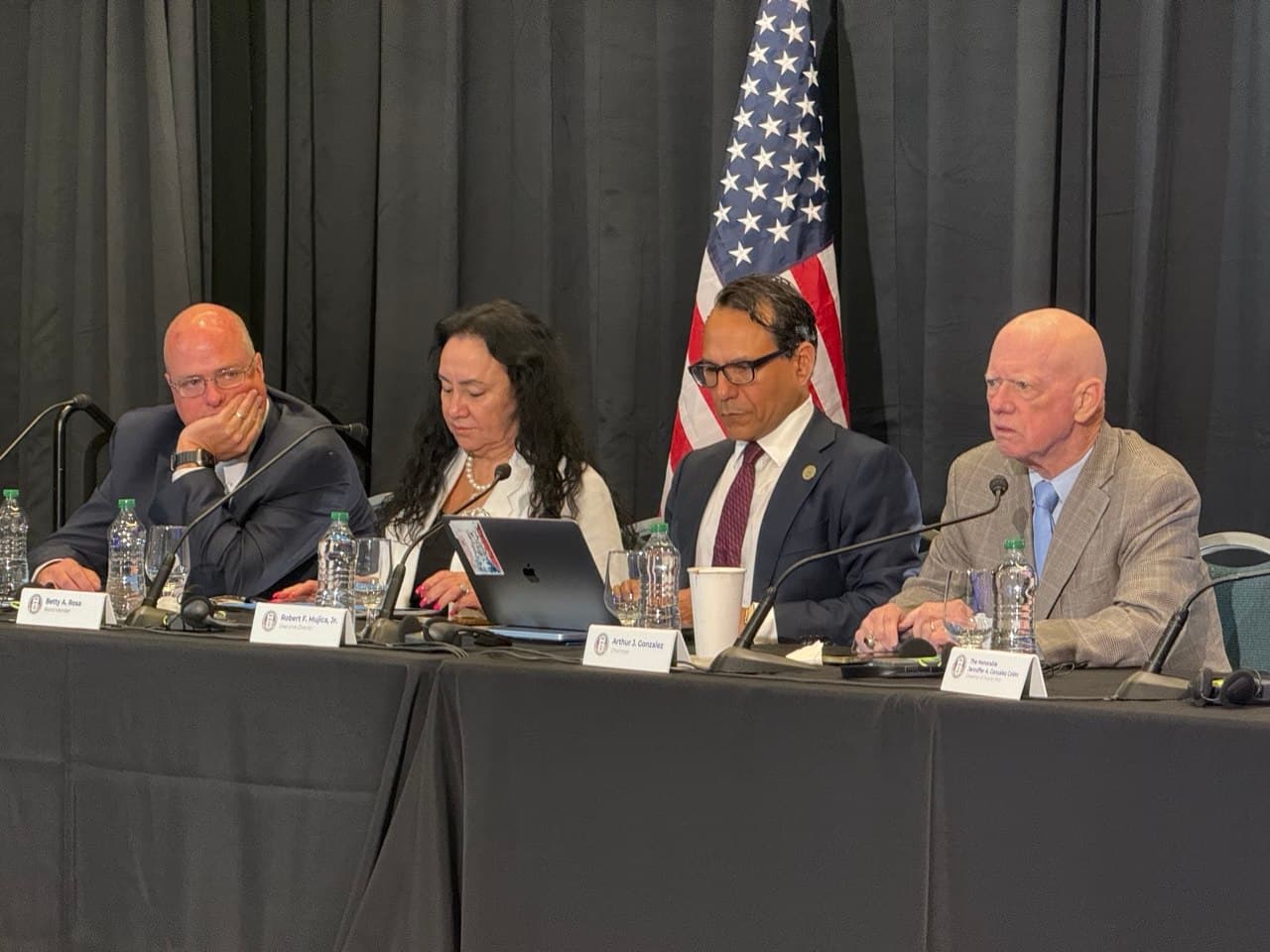
A high-stakes legal fight over the Puerto Rico Electric Power Authority’s (PREPA) revenues has grown more intense, with PREPA bondholders and the Financial Oversight and Management Board offering very different opinions on how billions of dollars in utility revenues should be counted and whether creditors have the right to recover money they say was wrongly taken during the utility’s bankruptcy.
The disagreement focuses on how to understand PREPA’s 1974 Trust Agreement and the meaning of “net revenues,” a term that could decide how much bondholders can claim in the public utility’s nearly ten-year Title III bankruptcy case. Bondholders say PREPA made at least billions in net revenues that should have been used to pay debts, but the Oversight Board argues that creditors are using incorrect accounting methods, disputed facts, and are misunderstanding both the Trust Agreement and federal bankruptcy law.
The opposing views are part of the so-called accounting claim, a court-ordered litigation track designed to determine the exact dollar value of bondholder collateral. It arose from a 2024 U.S. First Circuit Court of Appeals ruling, which held that bondholders have a non-recourse claim on PREPA’s estate for the principal amount of the bonds, plus matured interest. PREPA’s Net Revenues secure the claim.
The recent filings mark one of the most consequential phases of PREPA’s restructuring, as the parties seek summary judgment on issues that could significantly affect recoveries for bondholders and shape the utility’s eventual emergence from bankruptcy.
Bondholders argue that for more than four decades PREPA consistently calculated net revenues under a methodology that was repeatedly disclosed to investors, used in more than 30 bond issuances and never challenged before the bankruptcy. According to creditors, that longstanding practice reflected the parties’ understanding of the Trust Agreement and confirmed that certain revenues were pledged for the benefit of bondholders.
The Oversight Board rejects that premise, arguing that the methodology advanced by bondholders relies heavily on PREPA’s monthly operating reports, documents that it says were preliminary, unaudited, and never treated by the parties as definitive measures of available net revenues. According to the Board, PREPA’s financial history demonstrates why the reports cannot be viewed as reliable indicators of creditor collateral.
In its opposition filing, the Oversight Board notes that PREPA entered into forbearance agreements and sought accommodations from creditors even during periods when the monthly reports showed hundreds of millions of dollars in net revenues. The utility’s deteriorating financial condition, repeated refinancing efforts and eventual insolvency, the Board argues, demonstrate that the figures reported in those documents did not accurately reflect actual cash available for debt service.
How the Trust Agreement Defines Revenue
At the heart of the dispute is the meaning of “revenues” under the Trust Agreement.
Bondholders contend that revenues should be calculated using an accrual methodology consistent with the utility’s longstanding accounting practices. They argue that PREPA historically recognized revenues when earned, including amounts associated with municipal electricity consumption and Contributions in Lieu of Taxes, or CILT, even if those revenues did not involve immediate cash payments. They further contend that the Trust Agreement, accepted accounting standards, and decades of financial disclosures support this approach.
The Oversight Board, however, argues that the Trust Agreement’s language unambiguously defines revenues as “moneys received,” requiring a cash-based approach rather than an accrual method. Under that interpretation, amounts merely billed but not collected would not qualify as revenues available for debt service. The Board also points to prior First Circuit rulings, which it says establish that bondholders do not hold liens on receivables simply because those receivables may eventually generate cash.
Federal Disaster Funds at Issue
Another significant point of disagreement involves billions of dollars in federal disaster and reconstruction funding that has flowed into Puerto Rico’s electric system following Hurricanes Irma and Maria.
Bondholders argue the Oversight Board improperly excludes federal funds from revenue calculations while simultaneously counting expenditures paid with those funds as expenses. According to creditors, that treatment artificially lowers net revenues by creating a double deduction that diminishes amounts otherwise available to bondholders.
The Oversight Board counters that federal disaster assistance cannot be treated as utility revenues because those funds remain subject to extensive federal restrictions and are intended for specific recovery purposes. The Board argues that federal grants were never contemplated as revenues under the Trust Agreement and remain outside the bondholders’ collateral package.
Capital Spending Versus Operating Expenses
The debate extends to the treatment of capital spending, one of the most consequential issues in the case.
Bondholders maintain that the Trust Agreement draws a clear distinction between operating expenses and capital expenditures, with capital projects intended to be funded only after debt service obligations are satisfied. Their filing argues that the Board’s effort to classify capital spending as current expenses would fundamentally rewrite the agreement and erode protections that investors relied upon when purchasing PREPA debt.
The Oversight Board responds that expenditures cannot be categorized solely based on accounting classifications. Instead, it argues that many expenditures traditionally treated as capital investments were nevertheless necessary to maintain, repair, and operate PREPA’s severely degraded system. The Board points to findings by the Puerto Rico Energy Bureau describing widespread deterioration throughout PREPA’s generation, transmission and distribution networks and concludes that substantial infrastructure spending was indispensable to keeping the utility operational.
According to the Board, years of deferred maintenance, chronic underinvestment and hurricane damage created circumstances in which certain expenses traditionally viewed as capital improvements were essential operating expenditures under both the Trust Agreement and federal bankruptcy law.
Municipal Subsidies and CILT
The parties also sharply disagree over PREPA’s municipal subsidy programs and Contributions in Lieu of Taxes.
Bondholders argue that PREPA’s longstanding accounting practices properly recognized the value of electricity supplied to municipalities and associated CILT transactions as revenue. They contend these amounts have historically been included in revenue calculations and should continue to be considered when determining net revenues pledged to creditors.
The Oversight Board characterizes many of those entries as accounting constructs rather than actual revenues. It argues that statutorily mandated electricity provided free of charge to municipalities does not generate money received by PREPA and therefore should not be counted as revenue for purposes of calculating net revenues. The Board maintains that only actual cash collections associated with CILT riders paid by customers should be considered.
Decades of Financial Reports Under Scrutiny
A related dispute concerns the significance of decades of monthly operating reports and other financial disclosures.
Bondholders argue that PREPA’s historic reporting practices reflect the parties’ shared understanding of the Trust Agreement and demonstrate that the accounting methodology used for decades should control in the current litigation. They contend that neither PREPA nor its trustee challenged those calculations before bankruptcy.
The Oversight Board, however, says historical reports cannot override the Trust Agreement’s express language. It argues that Puerto Rico law prohibits using extrinsic evidence to reinterpret an unambiguous contract and maintains that the monthly reports were never treated as binding determinations of net revenues. The Board also disputes the bondholders’ contention that a binding course of performance arose from PREPA’s reporting practices.
The Section 928(b) Dispute
The battle over Section 928(b) of the Bankruptcy Code may prove equally important.
Bondholders contend that the provision, which subjects special revenue liens to necessary operating expenses during bankruptcy, should be interpreted narrowly. They argue that only genuine operating expenses should receive priority over their lien and that capital expenditures should not be elevated ahead of creditor claims.
The Oversight Board asserts that bondholders are attempting to strip the statute of its purpose. According to the Board, Congress intended Section 928(b) to establish a minimum federal standard ensuring that public infrastructure systems continue operating during bankruptcy, even if doing so requires expenditures that reduce creditor recoveries. The Board maintains that necessary operating expenses cannot be limited by a pre-bankruptcy contract negotiated more than 50 years ago under vastly different circumstances.
The Board further argues that PREPA’s current condition underscores why those protections are necessary. In its filing, it cites findings from regulators and experts describing PREPA as one of the nation’s least reliable electric systems, plagued by aging infrastructure, years of deferred maintenance and limited access to capital markets during bankruptcy.
What the Parties Want
Ultimately, the bondholders are seeking a declaration that PREPA generated billions of dollars in net revenues that should have been preserved for debt repayment and an accounting of those funds. They argue the utility’s historical accounting practices, contract language and course of conduct support their position.
The Oversight Board, meanwhile, argues that bondholders have failed to establish the existence of any improperly diverted net revenues, failed to prove entitlement to an accounting remedy and ignored factual disputes that preclude summary judgment. The Board maintains that even if net revenues existed, bondholders cannot automatically claim current PREPA cash balances or demand disgorgement of funds used to sustain and repair the electric system during bankruptcy.
Judge Laura Taylor Swain’s eventual ruling could determine not only how PREPA’s revenues are calculated but also the scope of bondholder recoveries and the financial framework for resolving what remains one of the largest and most complex public-sector bankruptcies in U.S. history.