Resident Commissioner says the measure ignores island’s economic pressures
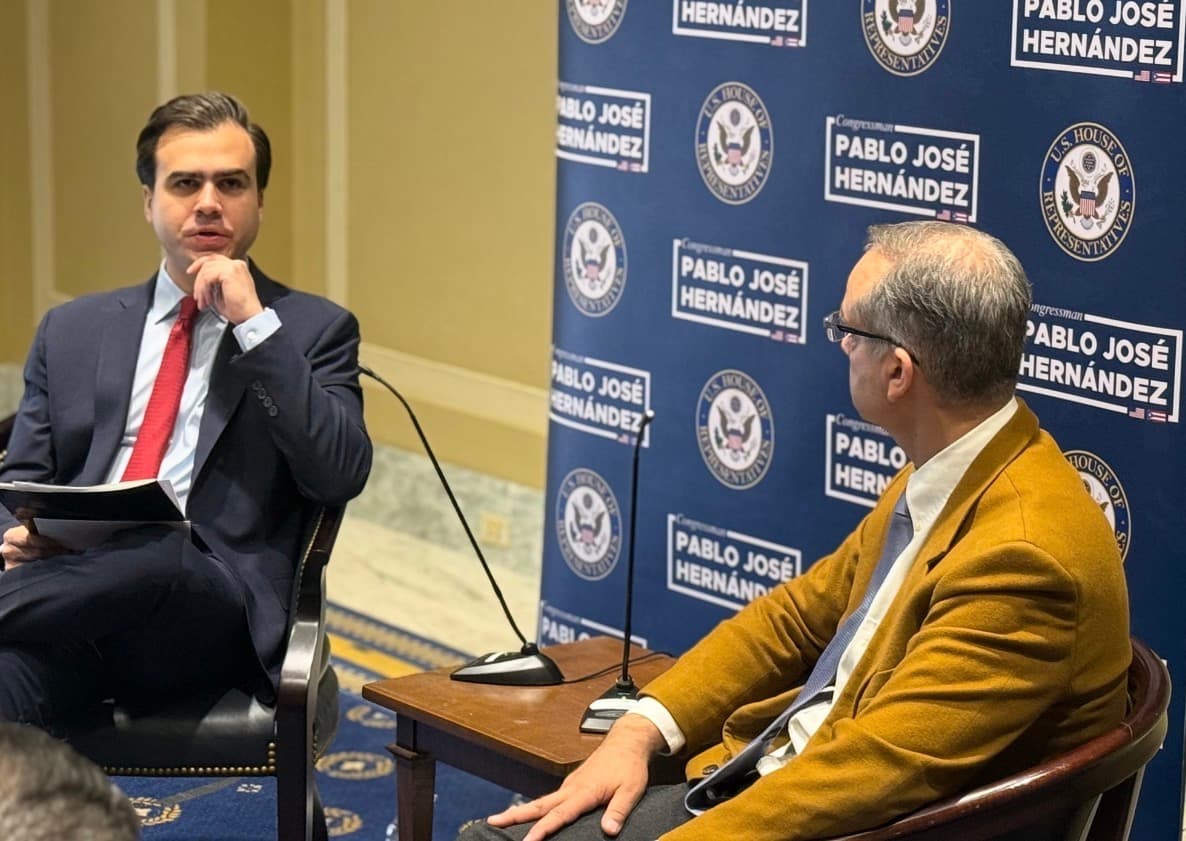
Washington Resident Commissioner Pablo José Hernández on Wednesday criticized a new Republican‑backed budget resolution in the U.S. House of Representatives, arguing that the framework opens the door to tens of billions of dollars in defense and agriculture spending while failing to address the island’s most urgent economic pressures.
Hernández said in a statement that the measure, approved 216–214, authorizes committees to begin drafting legislation that could ultimately steer up to $72 billion toward Pentagon operations and agriculture programs — but without guaranteeing resources to reduce the cost of living, strengthen healthcare access, or accelerate Puerto Rico’s long‑delayed reconstruction.
“Today, Congress did not vote to lower the purchase price, improve access to medical services, or accelerate Puerto Rico’s reconstruction,” Hernández said. “It voted to open the door to tens of billions of dollars in new spending, while the most urgent needs of our people continue to wait.”
Under the resolution, the House Armed Services Committee may prepare up to $60 billion in new defense spending, while the Agriculture Committee may draft up to $12 billion in additional outlays. The resolution does not itself allocate the funds; instead, it triggers the reconciliation process, allowing Republicans to craft a large‑scale spending package that could bypass the Senate’s 60‑vote threshold.
The broader GOP framework totals $95 billion over ten years, including defense and intelligence funding tied to the ongoing conflict with Iran, agriculture aid, and $10 billion for a grant program aimed at encouraging states to adopt Trump‑backed voting restrictions. Speaker Mike Johnson called the package a victory for Republicans, saying it supports “our troops, our farmers, and election security.”
But the measure faces resistance in the Senate, where Majority Leader John Thune said he would hold reconciliation “as a backup” while lawmakers focus on avoiding a government shutdown later this year. Several Senate Republicans have also expressed concerns about the lack of spending offsets.
Budget hawks in the House echoed those objections. Rep. Warren Davidson voted against the resolution over its deficit impact, while Rep. Kevin Kiley criticized the use of reconciliation to advance Iran‑related funding without bipartisan agreement. The framework is significantly smaller than the $350 billion Pentagon boost President Trump had initially sought, according to The Hill.
For Puerto Rico, Hernández said the implications are clear: Congress may move forward with billions in new military and agriculture spending — including funds to address tariff impacts from Trump’s trade policies — while offering no assurances that federal support will expand for families facing rising prices, hospitals struggling with capacity, or communities still waiting for reconstruction dollars.
The resolution also instructs the House Intelligence and House Administration committees to increase spending, contributing to the projected $95 billion deficit impact over the next decade.
Budget resolutions do not become law or require presidential approval. Instead, they set the parameters for committees to draft the next reconciliation package. Hernández said he will continue reviewing the emerging proposals and “overseeing any impact over Puerto Rico” as the process unfolds.
As the House moves forward, the Senate must adopt the resolution — or amend it, forcing another House vote — before committees begin writing the detailed legislation. Republicans argue reconciliation remains their best chance to advance defense spending and elements of the Safeguard American Voter Eligibility (SAVE America) Act, though Senate rules limit how far policy changes can go.
Democrats sharply opposed the measure. House Minority Leader Hakeem Jeffries called it “reckless,” arguing that Trump’s approach to Iran has created “a potentially endless war” and that the GOP blueprint prioritizes military escalation over domestic needs.
For Puerto Rico, Hernández said, the stakes are straightforward: billions for war, but no guarantees for the island’s economic stability.