Hilton Dual-Brand Hotel Opens in Harbor District, as San Juan Bets Room Supply Will Pull In Conventions
The $77 million, 257-room complex lifts the district’s inventory by 26.9% just as tourism reaches 126,000 jobs and nearly $8 billion in 2026 visitor spending
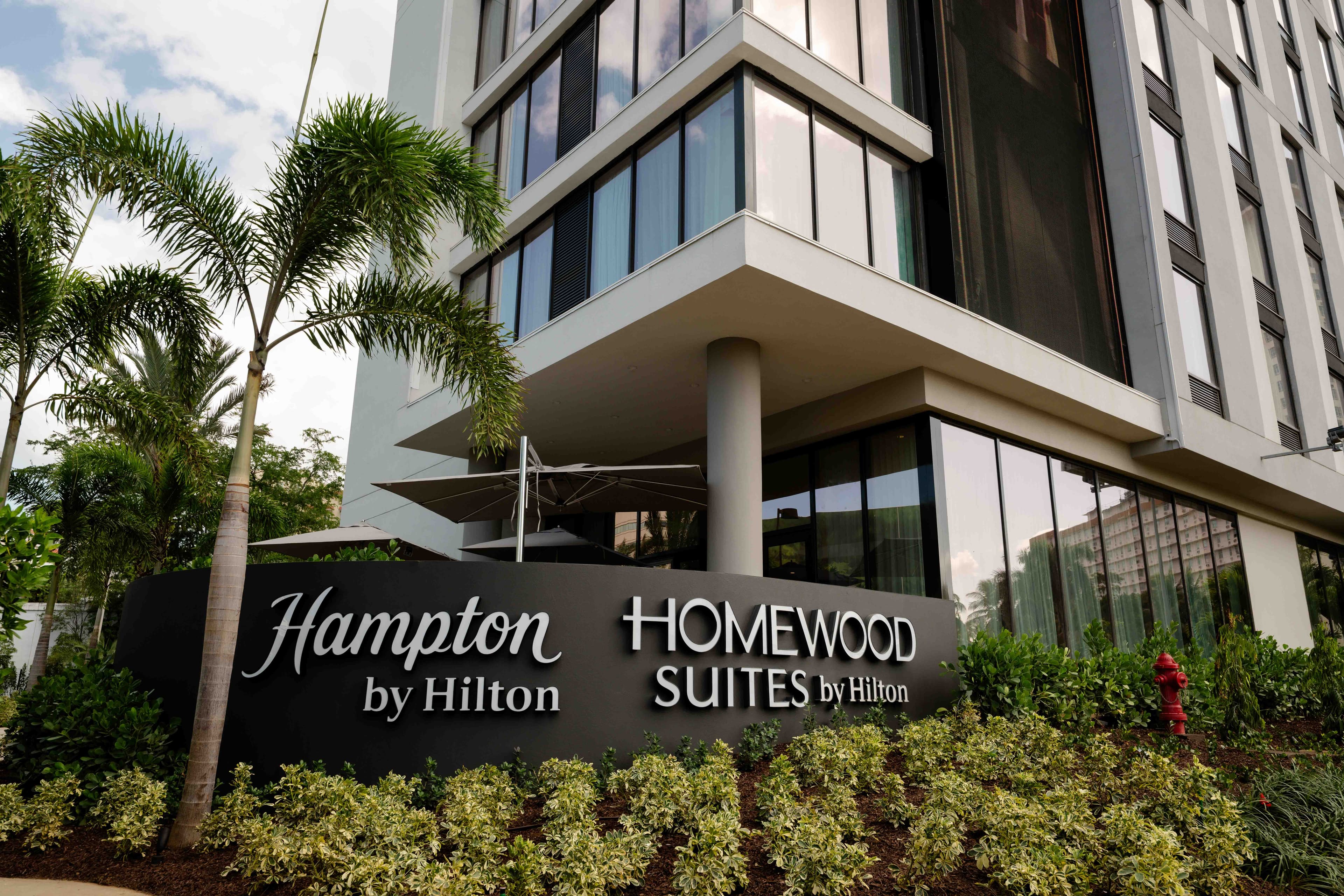
PRISA Group has opened Hampton by Hilton San Juan and Homewood Suites by Hilton San Juan, a $77 million-plus dual-brand complex that adds 257 rooms to the Convention Center District and lifts its hotel inventory from 955 to 1,212 rooms, a 26.9% increase.
The opening gives the district, which its Authority recently rebranded as the Harbor District, the lodging capacity that planners have said for two decades it needed to compete for large conventions.
The complex arrives as Puerto Rico’s visitor economy continues to grow. A new model from Foundation for Puerto Rico, first revealed earlier today in this exclusive story by Caribbean Business, projects nearly $7.9 billion in direct tourist spending in 2026 and about 126,000 tourism jobs.
The hotel is the centerpiece of the Harbor District vision’s lodging side, and the clearest test so far of whether the district can turn room inventory into convention business.
“We are not developing isolated projects; we are building an ecosystem where hospitality, conventions, entertainment and experiences complement each other to generate economic activity and new opportunities.”
PRISA Group CEO Federico Stubbe
A district that finally has the rooms
With the new complex, PRISA says, the district now offers lodging from three of the world’s largest hotel companies: Hilton, Hyatt and Marriott. Hilton is new to the district. The 257 rooms represent 21.2% of the district’s 1,212-room inventory, according to the company’s figures.
Homewood Suites has 125 residential-style suites designed for short or extended stays, with separate sleeping and living areas and fully equipped kitchens. Hampton has 132 rooms.
PRISA says Homewood is the first of the brand in Puerto Rico and the second in the Caribbean, and that both hotels belong to the Hilton Honors loyalty program. PRISA Hospitality, the company’s hotel management arm, operates both, the first newly built hotel it runs directly.
Guests share a hot breakfast, a 24-hour Puerto Rican coffee station, a lobby bar and terrace, a 24/7 market, a gym and a rooftop with a pool, bar, cabanas and views of San Juan Bay.
The complex also has more than 3,000 square feet of flexible meeting space for corporate and social events. After dark, the Homewood facade carries “El Ascensor,” a digital artwork by Culture Create on a vertical LED screen that depicts an elevator moving up and down the building.
The shared-amenity design, which PRISA says it first developed in Florida, lets the two brands split costs while serving different travelers: the extended-stay guest on a project assignment and the shorter-stay visitor attending a meeting or event.
“Our growth in the Caribbean is driven by strong relationships with owners who share Hilton’s long-term vision for the region,” said Pablo Maturana, Hilton’s vice president of development for the Caribbean and Latin America.
Public money as the lever
Construction began in 2024 with financing from Banco Popular de Puerto Rico and federal Community Development Block Grant funds under the CDBG-IPG program. Housing Secretary Luis Augusto Martínez said the Housing Department contributed $10 million, which helped drive a total investment of $77 million.
By that arithmetic, public money covered roughly 13% of the project, with private capital supplying the rest.
Government officials cast the project as a model for using federal recovery funds to draw private investment.
“This project is an example of how federal recovery funds are being used as a tool to attract private investment, strengthen our tourism infrastructure and generate new job opportunities,” Martínez said.
Gov. Jenniffer González Colón said the collaboration between government and the private sector “translates into investment, jobs and opportunities for our people.”
Employment figures vary among the officials. The developer projected 301 direct construction jobs and 102 operating jobs when the project began. The governor now cites more than 104 permanent direct jobs, while the Housing secretary refers to about 100.
All three point to roughly 100 permanent positions, a modest number next to the 126,000 jobs the sector supports but a meaningful one for a single property.
One piece of a larger waterfront plan
The hotel fits into a plan that has taken far longer than expected. As CB reported on Oct. 23, the Convention Center District Authority, led by Executive Director Verónica Ferraiuoli Hornedo, rebranded the area as the Harbor District, organized around three ideas: work, play and live. The brand ties together the Authority’s remaining parcels, PRISA’s projects and the Bahía Urbana redevelopment.
The vision revives an older goal. The 2004 plan called for a $415 million convention center on 113 acres at Isla Grande, anchoring more than $1.3 billion in investment, with full build-out targeted for 2012. That build-out remains unfinished. PRISA says it has invested close to $550 million in the district, and Distrito T-Mobile, which opened in 2021, draws about 3.4 million visitors a year.
More is on the way. Distrito Park, a $4 million project, is expected to open in the first quarter of 2028, and the roughly $20 million Distrito Sports Hub is expected in the first half of 2027. The 38-unit One Distrito Residences has reportedly sold out, with a waiting list of 1,400 buyers.
PRISA Presents also plans a 30-show Cirque du Soleil residency at the Music Hall from February to April 2027, valued at more than $10 million and estimated to generate $63 million in economic impact.
PRISA Group CEO Federico Stubbe framed the strategy as an ecosystem. “We are not developing isolated projects; we are building an ecosystem where hospitality, conventions, entertainment and experiences complement each other to generate economic activity and new opportunities,” he said.
Growth with a soft spot
The industry the hotel is joining is expanding. Foundation for Puerto Rico’s model projects direct visitor spending of nearly $7.9 billion this year, up 4.2%, with overnight visitors up 2.6% and average daily spending of $274.50. Lodging revenue rose 6% from January through September, and the model’s 2030 outlook calls for about $9.6 billion in spending and 6.7 million overnight visitors.
The picture is not uniform. Airport passenger traffic at San Juan is down about 3% year to date, according to the same model. Lodging revenue growing faster than visitor counts suggests that higher room rates and spending per guest, rather than additional arrivals, are driving much of the gain.
“The opening of Hampton by Hilton San Juan and Homewood Suites by Hilton San Juan strengthens the district’s hospitality offering and our ability to attract more conventions, events and visitors to Puerto Rico,” Ferraiuoli said.
Tourism Company Executive Director Willianette Robles Cancel said the hotels expand lodging options and strengthen the island’s positioning as a destination.
Group business is the logical way to absorb new rooms, because a convention brings guests who need beds regardless of seasonal leisure patterns. It is also why the Harbor District’s other pieces matter to the hotel’s economics: the Cirque residency, the sports hub and the park are meant to give visitors reasons to arrive on dates when no convention is scheduled.
A second wave of supply is also being discussed. If approved, the Bahía Urbana plan could add about 500 rooms to the roughly 1,700 in the area today. The $10 million public contribution will look well spent if the new rooms bring in conventions that otherwise would have gone elsewhere, and if the waterfront walkways and public spaces financed with an additional $130 million in federal funds, according to published reports, make the district a place visitors stay in rather than pass through.
The 34-year-old property at the Hilton Ponce Golf & Casino Resort unveils a more contemporary identity for new generations of visitors while keeping the tradition that built its following