That pressure is reflected in the latest Consumer Price Index (CPI) report from the Puerto Rico Department of Labor and Human Resources (DTRH), published Oct. 26. The index rose year over year in September, driven mainly by transportation and fuel costs. The CPI reached 144.673 points in September, up 0.5% from August and 3.8% from September 2025.
What the dollar buys now
Another indicator of pressure on household budgets is the dollar’s purchasing power, which stood at about 69 cents in September. That means the dollar has lost roughly 31% of its buying power compared with December 2006, the base period used to calculate the index.
To put it in dollars and cents, a purchase that cost $100 in December 2006 would cost about $144.67 in September 2026, based on the cumulative increase in the overall price level.
Calero said the loss of value reflects sustained increases in consumers’ major expenses. “As prices have kept rising every year, they have definitely been eroding the dollar’s purchasing power,” she said, warning that the loss is putting the middle class in an increasingly difficult position.
Gasoline and transportation hit hardest
The transportation group posted the largest increase of all, rising 9.7% over the year. The DTRH report itself explains that “the largest increase was observed in the public transportation subgroup, with a 1.9% increase,” driven “mainly” by “the increase in the price of airfares.” In concrete terms, a round-trip ticket that cost $400 a year ago now costs about $438, based on the increase in that item over the past 12 months.
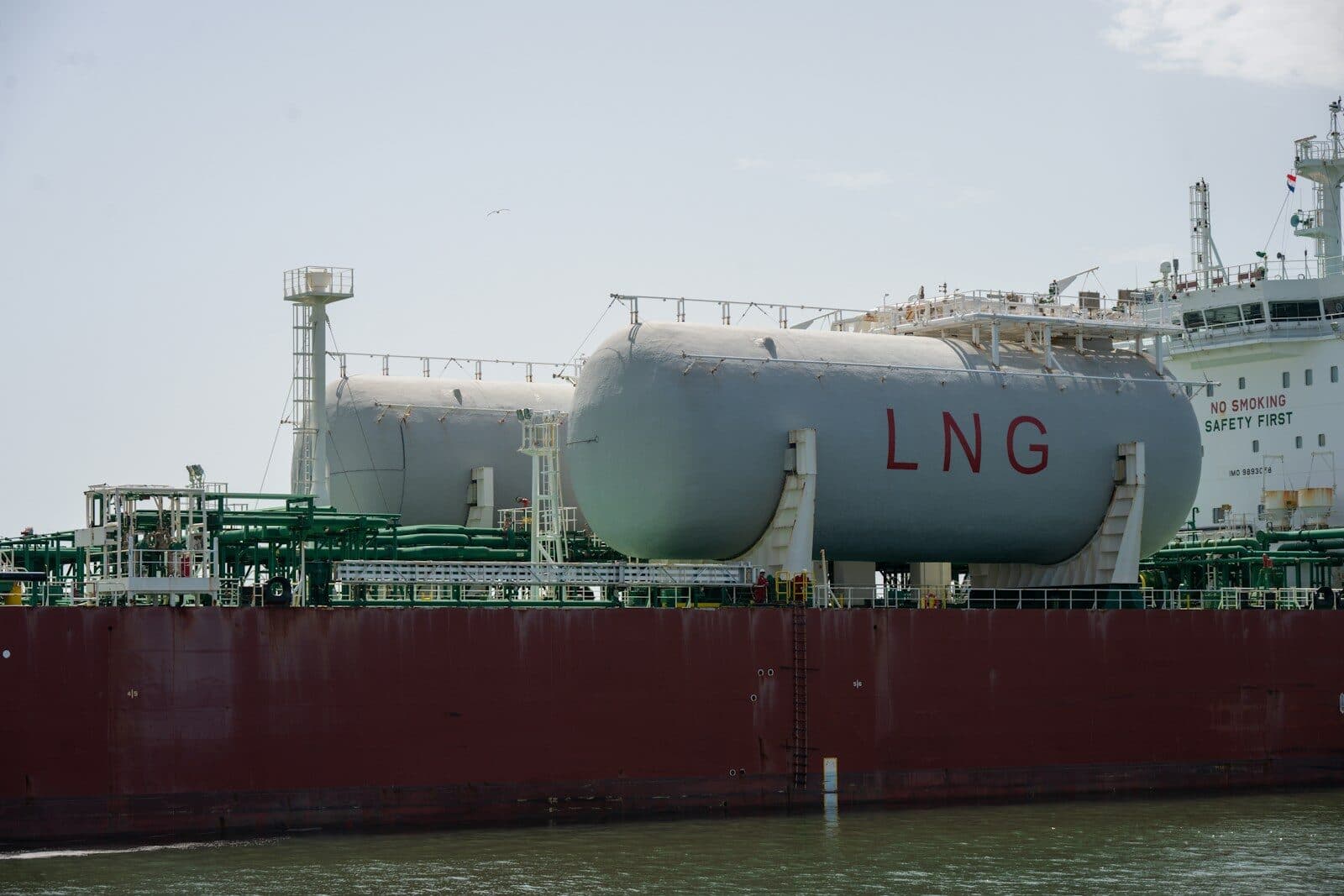
Gasoline was worse. Fuel for cars rose 4.7% in the last month alone and is up 33.2% so far this year, the largest increase in the entire report. To illustrate the impact, if filling a gas tank cost $40 a year ago, a 33.2% increase would mean a cost of about $53.28 for the same amount of fuel.
Calero said the effect of fuel goes beyond what drivers pay directly. Because Puerto Rico depends on imported goods, oil prices influence nearly the entire distribution chain for the merchandise that reaches the island.
“Puerto Rico, being an island, imports practically everything that comes by ship or by plane,” she said.
Once goods arrive in Puerto Rico, they must be transported by road, which adds another cost tied to diesel fuel. In that context, higher transportation and energy costs can pressure businesses’ operating costs and, eventually, the prices consumers pay.
Food and electricity
The food and beverage group rose 0.6% during September and 2.5% compared with the same month of 2025. As an example, a grocery purchase that cost $150 a year ago would require about $153.75 if its price had risen at the category’s average pace. Although the individual increase may seem small, it adds to other recurring commitments, such as electricity, water, transportation, medicine and housing.
Federal projections point the same way. In its October update, the U.S. Department of Agriculture (USDA) estimated that food purchased for home consumption would rise 2.3% in the United States during 2026, while food consumed away from home would rise 3.5%.
Energy costs are among the factors with the greatest effect on Puerto Rico’s economy. Their impact goes beyond the household bill: businesses also need electricity to operate, refrigerate merchandise, deliver services and maintain their facilities. When those costs rise, companies face greater financial pressure, which can affect their profit margins and pricing decisions.
Business groups sound the alarm
Alan Taveras Sepúlveda, president of the Centro Unido de Detallistas (CUD), recently warned that “we are facing an extremely urgent situation.” By the CUD’s estimates, more than 12,000 small and medium-sized businesses (SMEs) could close and about 70,000 jobs could be lost if high energy costs are not relieved. The CUD linked this to bankruptcies: there were 551 in September, 5.8% more than in September 2025. If the trend continues, the CUD says, 2026 would see about 6,263 bankruptcies, the highest figure in seven years.
José Julio Aparicio Laspina, president of the Puerto Rico Chamber of Commerce, agreed with the CUD’s concern. “We are saying that we are living through a national economic emergency, that is what I think,” he said in an interview, warning that “all the metrics we are seeing are contrary to where they should be.”
Aparicio Laspina illustrated the situation with an analogy: “What should be green is red, and what should be red is green,” he said, referring to the behavior of the island’s main economic indicators.
The Chamber president said he had called an emergency meeting this week with all organizations representing the private sector to discuss “in the short term how to alleviate this.” Without action, he warned, Puerto Rico could face “the saddest holidays in a long time because of operating costs.”
On the role of government, Aparicio Laspina stressed that “we are not going to sit around waiting for the government to tell us how it will help us. We are going to provide, to solve.” He insisted that the private sector must take a leading role in the crisis, with the government acting as a facilitator.
The squeezed middle class
The most pointed warnings from Calero were directed at middle-income families. The economist said people with greater resources have more capacity to absorb increases, and some low-income households can access assistance programs. Many middle-class families, however, struggle to meet their obligations without necessarily having those options.
“Those of us in the middle are the middle class, the ham in the sandwich, and it is definitely maddening,” she said. The concern is more pressing in a jurisdiction where a considerable share of the population lives in economically vulnerable conditions.
According to the U.S. Census Bureau, the poverty rate in Puerto Rico was 37.3% in 2024. For households with limited or fixed incomes, any increase in food, electricity or transportation can take up a significant portion of the money available.
In addition, a slowdown in inflation does not necessarily mean prices return to their earlier levels. In many cases, they simply keep rising more slowly.
A recovery that does not take off
The cost-of-living picture contrasts with signs of recovery in the Economic Cycle Indexes report by economist Ángel Rivera Montañez. According to that analysis, economic activity improved for three consecutive months through August 2026, driven in part by manufacturing and other productive indicators. During that period, roughly 1,100 manufacturing jobs were added.
The improvement, however, does not yet fully offset the earlier weakness. In the first eight months of 2026, the economic indicator remained 0.4% below its level for the same period of 2025. Calero was skeptical about the extent of the recovery. “I am sure that the contraction is greater,” she said.
The Rivera Montañez report also warns of recession risks despite recent gains in some indicators. Among the concerns are high energy costs, pressure on businesses and international economic uncertainty. “The recession probability analysis maintains an active alert, indicating that a recession is imminent or could already be under way,” the document reviewed by Metro Puerto Rico states.
The combination of higher prices, weaker purchasing power and a possible recession keeps pressure on Puerto Ricans’ budgets, particularly on the middle class trying to maintain its spending without losing its quality of life. “Unfortunately, it seems we still do not see a light at the end of the tunnel,” Calero concluded. What makes these numbers more than a cost-of-living story is where they converge. Households can cut back on some spending, but they cannot easily reduce what they pay for power and transport, and those costs flow straight into the small and medium-sized businesses that sell to them.
That is the dynamic CB has called the Pymes Power Cliff: if energy costs stay high, the operators at the bottom of the chain are the first to fall, and their closures remove both customers and jobs from the local economy.