Unions Reject Bill to Repeal Minimum Wage Commission, Citing Jobs Data
Listen to this article
0:00 / 0:00
Business groups support the measure, saying panel is biased and operates without full representation
Leaders from the island’s main labor unions urged lawmakers on Monday to reject House Bill 1115, a measure that would repeal Law 41-2021—commonly referred to as the Minimum Wage Law—and shift minimum-wage authority back to the Legislative Assembly.
Union representatives told the House Committee on Labor and Employment Affairs that Department of Labor and Human Resources (DTRH) indicators show that the minimum wage policy has strengthened the economy and benefited more than 250,000 workers.
Emilio Nieves Torres, president of the Puerto Rican Workers’ Central (CPT), cited DTRH data showing that Puerto Rico’s unemployment rate fell to 5.7% through December 2025.
He said labor force participation rose to 45.4% over the same period and argued that the agency’s figures show stability in employee retention across productive sectors. “When 250,000 workers in the country benefit… that’s something to celebrate, and therefore, something good came out of the Legislature that we must defend,” Nieves Torres told the committee, chaired by New Progressive Party Rep. Roberto López Román.
Nieves Torres added that the data undercuts claims that raising the minimum wage costs jobs. “This data refutes the argument that an increase in the minimum wage causes job losses or business closures. On the contrary, it confirms that improving workers’ income boosts the economy,” he said.
López Román, the bill’s author, convened the hearing after the full House returned an initial committee report recommending approval of the measure for further review.
The representative said the proposal would restore to lawmakers the power to set the local minimum wage, arguing the decision should be made through a process with public accountability that “only elected officials can provide.”
He also criticized the Minimum Wage Evaluation Commission created under Law 47, saying it has not delivered the agility and representativeness lawmakers expected and has operated with five of the seven members required by law.
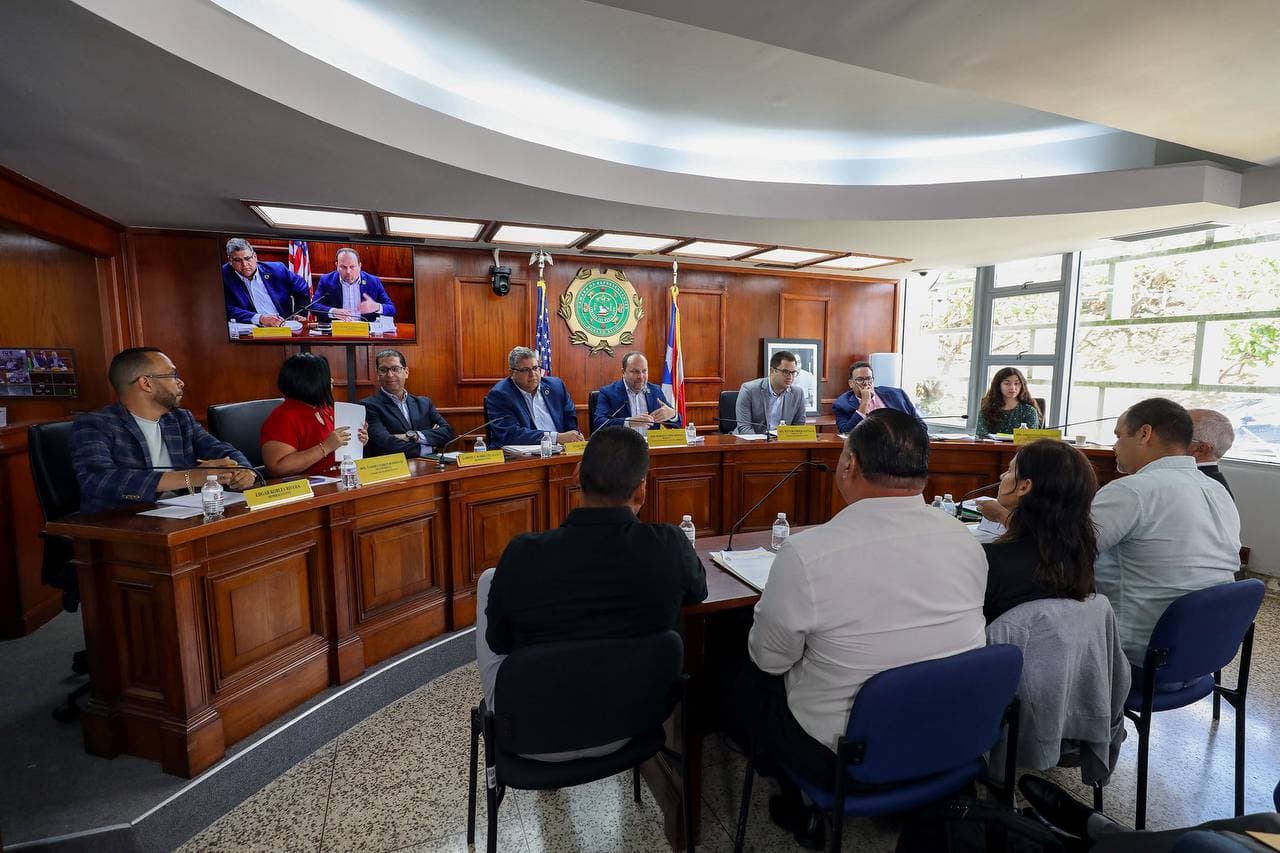
Union leaders testified before the House Committee on Labor and Employment Affairs in opposition to House Bill 1115, arguing that Puerto Rico’s current minimum wage framework has benefited workers and strengthened the Island’s economy. (Photo provided by the Puerto Rico House of Representatives.)
Business groups support the bill
Business organizations this week renewed calls to eliminate Puerto Rico’s Minimum Wage Evaluation Commission, saying the panel is biased, operates without full representation and makes decisions with a reduced quorum.
They also questioned labor representation on the commission, arguing that unions have a limited presence in the private sector and noting that the government is excluded from the law’s application.
In written statements, Manuel Reyes, executive vice president of the Food Marketing, Industry and Distribution Chamber (MIDA), said the debate should focus on the economic governance model Puerto Rico wants. “The commission was a bad idea from the start, and that has become clear after five years,” Reyes said.
He argued that because the commission has never had all seven members and has operated with five, “a simple majority of three unelected people holds enormous power over the entire economy.” Reyes also said those votes come from “government and government unions,” where he noted the law does not apply, and added that private-sector unions are “virtually” nonexistent.
Sonia Navarro, president of the Puerto Rico Restaurant Association (ASORE), said the commission is not equipped to manage an issue she described as highly sensitive for the Island. She warned that decisions can affect operating costs, staffing levels and pay structures between employees and supervisors.
The organizations called for abolishing the current commission and starting what they described as a serious process to create a new mechanism that is participatory, transparent and able to earn public trust.
Commission gets mixed reviews
In written conclusions, López Román said the commission’s administrative shortcomings are reflected in repeated periods without a quorum. He also rejected criticism that the measure is intended to “freeze” the current minimum wage of $10.50 an hour.
As an example of what he described as noncompliance, López Román pointed to the agricultural sector, where a base wage of $5.08 an hour remains in place in various areas — a level he called “extreme precariousness.” He also said the DTRH information shows the commission did not meet for a combined 12 months beginning in 2024, despite Law 47 requiring monthly working meetings.
“We are talking here about the minimum wage for most people in Puerto Rico… and what I don’t understand is, if this is such an important matter, why were there months when there was no communication between you?” López Román said.
Union leaders said the missed meetings stemmed in part from the limited schedule of Labor Secretary María del Pilar Vélez and from leadership turnover at the agency since 2024.
Witnesses defended keeping the Evaluation Commission as an independent body tasked with implementing labor policy while limiting partisan considerations. While they said Law 47 could be strengthened, they argued the current framework is the best way to set criteria tied to the cost of living and the income needed for workers to stay above the poverty line.
“The goal is for everyone who works full-time, regardless of their academic background or occupation, to earn a wage sufficient to live,” said economist Iyari Ríos, a member of the Evaluation Commission.
Ríos said one concern is that repealing the current structure could eliminate the requirement for periodic minimum-wage reviews, which are currently mandated every two years.
Professor Vanessa Contreras, a spokesperson for the Solidarity Union Movement, attributed vacancies on the commission to the Executive Branch’s failure to appoint members representing workers and employers. She said that even without a full slate of commissioners, the panel approved the increase to $10.50 an hour in the summer of 2024, arguing it met the mandate that full-time workers should not live below the poverty line.
Popular Democratic Party Rep. Héctor Ferrer Santiago, who authored Law 47, also opposed the legislation, saying the current law enabled an increase in the minimum wage.
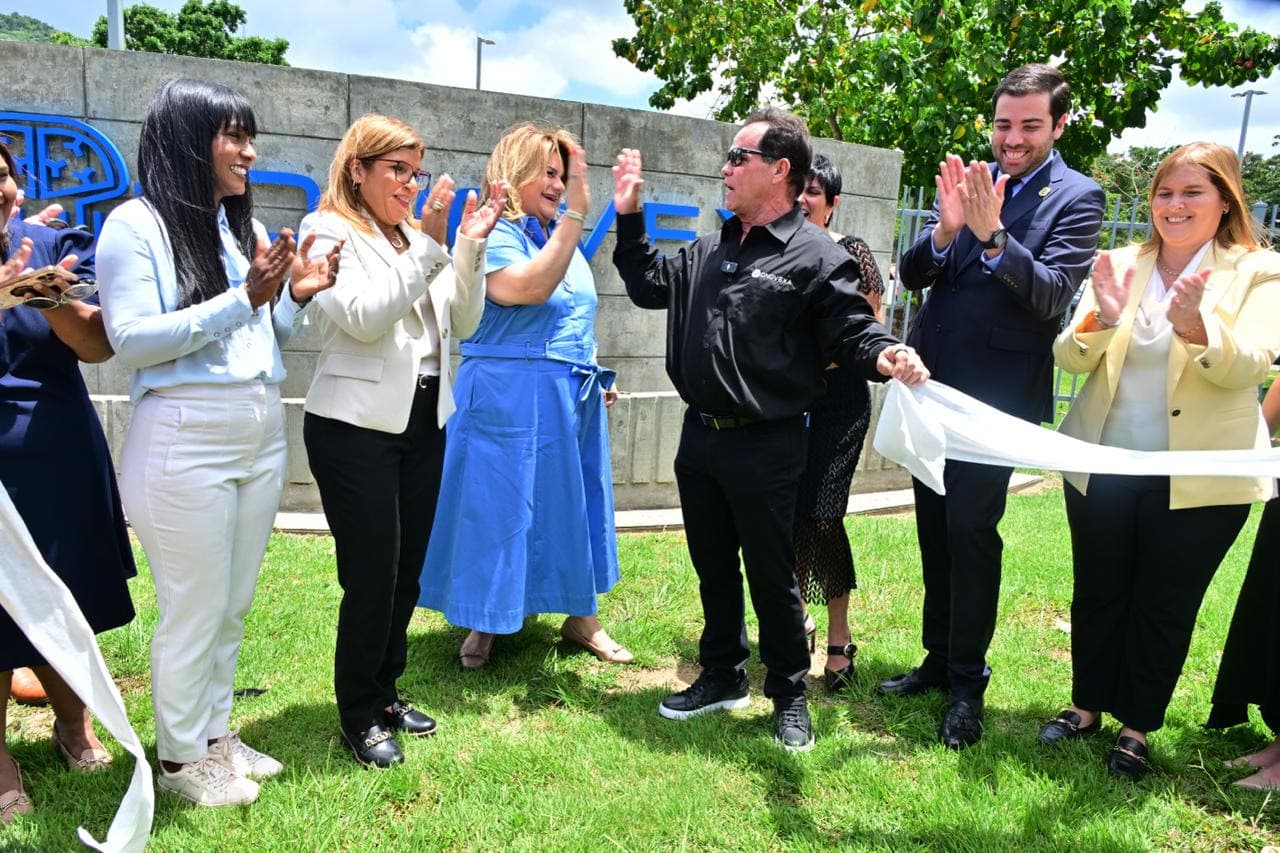
Puerto Rico continues to strengthen its position as a manufacturing hub with the announcement of a new multimillion-dollar industrial operation in Humacao focused on consumer, medical, and hygiene products. Governor Jenniffer González Colón announced the establishment of Onovexa LLC alongside Department of Economic Development and Commerce Secretary Sebastián Negrón Reichard and Jorge “Tato” González Camp, […]
When attorney Juan Manzano Trujillo opted to forgo the traditional law firm structure seven years ago to establish a solo legal practice, he knew he was trading business support for autonomy Law firms typically provide attorneys with paralegals, administrative staff and research assistance. As a solo practitioner, Manzano writes his own motions, conducts depositions and […]