Success has come largely to those medical professionals and facilities on the Island that have developed, largely on their own initiative, a network of medical tourism patients from across the Caribbean.
On the positive side, Puerto Rico’s medical professionals are largely bilingual and hospitals are certified by the U.S. Joint Commission, including board-certified doctors, guaranteeing a standard of care.
But there are several drawbacks for Puerto Rico: the U.S. territory lacks a coordinated medical tourism strategy, stable air transportation links across the Caribbean, and dedicated government oversight, limiting the sector’s potential as a driver of economic diversification and institutional growth.
When Sononuclear Imaging Center installed Puerto Rico’s first PET‑CT scanner in the early 2000s, the decision was motivated by clinical necessity, not as an export strategy. Yet the moment the technology came online, the phones began to ring, not only from across the island, but from across the Caribbean Sea.
“We were the first to bring PET‑CT imaging to Puerto Rico around 2000,” said Liza Torres, co‑owner of Sononuclear and one of the island’s earliest medical tourism pioneers. “Once that happened, the calls started coming in from other Caribbean islands that didn’t have access to this technology.”
At the time, PET‑CT scans—critical for identifying cancer metastasis and monitoring treatment response—were virtually nonexistent throughout much of the region. For patients in St. Kitts, Antigua, Tortola, Anguilla, or St. Martin, traveling to the U.S. mainland was often the only option. Puerto Rico, with its U.S. medical standards and geographic proximity, emerged as a closer, more affordable alternative.
Without a formal strategy or government directive, Puerto Rico’s medical tourism sector began not through branding campaigns or glossy brochures, but through necessity.
A Regional Hub Born of Absence
Sononuclear itself grew from a family-run nuclear medicine lab founded by Torres’ father. After his passing, Torres and physician partner Dr. Jorge Toro assumed ownership. What distinguished Sononuclear in the early years was not only its equipment, but an accidental asset: Torres spoke English.
“At the time, nobody here spoke English,” Torres recalled. “So any English‑language call—from the islands, from insurance officials—was sent to me.”
That linguistic fluency turned Torres into an informal conduit between Caribbean governments and Puerto Rico’s healthcare system. In many neighboring islands, healthcare referrals are centrally managed by public insurance systems. When advanced diagnostics were unavailable locally, governments—not individual patients—arranged travel, negotiated rates and covered costs.
“These are not wealthy patients,” Torres emphasized. “These are working‑class people the government sends because the service doesn’t exist where they live.”
Islands such as the British Virgin Islands, through programs like National Health Insurance (NHI), and St. Martin, through its public plan SRB, began sending patients systematically. By 2015, SRB was referring all PET scans to Puerto Rico. Dominican Republic patients, by contrast, arrived independently and paid out‑of‑pocket, navigating logistics on their own.
Puerto Rico never built a parallel system.
“There was never a government office coordinating medical tourism,” Torres said. “Hospitals operated on their own, and everyone worked in isolation.”
The Short‑Lived Boom
That fragmentation briefly disappeared in the early 2010s, when the territorial government launched a formal medical tourism initiative. Under then‑director Francisco Bonet, Puerto Rico aligned hospitals, clinics, hotels, and transportation providers under international medical travel standards.
“He created an incredible boom,” Torres said. “Hospitals were accredited. Clinics were accredited. Hotels too.”
Puerto Rico certified providers through what is now the Medical Travel Association. Hospitals opened international offices abroad. Dedicated coordinators managed complex itineraries. For a moment, Puerto Rico positioned itself as a regional healthcare hub.
Then the initiative vanished.
“When Bonet left, everything collapsed,” Torres said. “There is nobody in government now responsible for this.”
Caribbean Business confirmed that the medical tourism office once housed within the Puerto Rico Tourism Company no longer exists. When asked who handles medical tourism, Tourism Company officials responded that there is no designated liaison. Brochures about medical tourism are absent.
No centralized data exists either on medical travel to the Island, as Caribbean Business confirmed with the Puerto Rico Institute of Statistics. Yet the work never fully stopped among local medical facilities.
A Medical Care Need
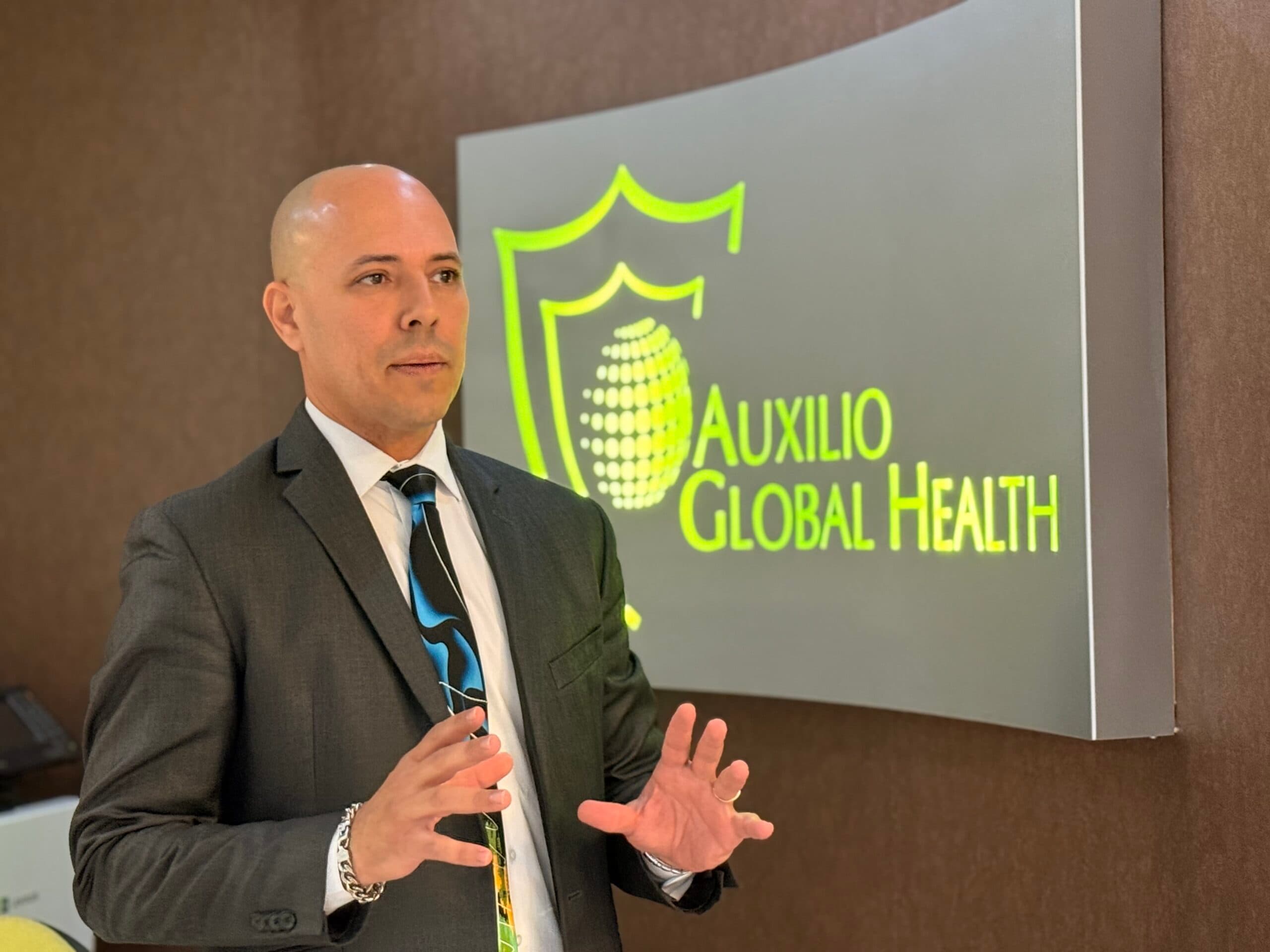
At Auxilio Mutuo Hospital in San Juan, medical tourism functions less like a marketing initiative and more like a necessity built into daily operations.
“We’re surrounded by islands that simply don’t have certain medical services,” said Henry Quiñones, manager of international patient services at Auxilio Mutuo Global Health. “For many patients, leaving their island isn’t optional. If they don’t travel, they don’t survive.”
Puerto Rico’s geographic position and U.S.-standard healthcare system have quietly transformed the island into a regional referral center for the Eastern Caribbean. Auxilio Mutuo routinely receives patients from the British Virgin Islands, the U.S. Virgin Islands, Anguilla, St. Kitts, and other neighboring territories where advanced care—such as open‑heart surgery, catheterization labs, radiation oncology, and organ transplantation—does not exist.
For many of these patients, the alternative has traditionally been the U.S. mainland, often Miami. But travel to the mainland comes with higher insurance co‑pays, higher out‑of‑pocket costs, longer flights, visa complications in some cases, and more complex logistics.
“Here, the system is the same as the United States,” Quiñones explained. “But culturally and structurally, the costs are lower, and geographically, we’re much closer.”
Building Referral Networks without Government Coordination
Auxilio Mutuo formally launched its international patient program in 2015, not as a tourism product, but as a response to growing inbound demand. Since then, Quiñones and his team have spent years cultivating referral pipelines across the Caribbean, traveling regularly to medical conferences, insurer meetings and health fairs.
Those efforts focus on relationship‑building rather than advertising.
“When a complex or urgent case comes up, partners need to know exactly where to call,” Quiñones said. “They need confidence that the patient will be received, evaluated quickly, and treated without delays.”
Referrals come through a mix of public insurers, private clinics, government health agencies, and physician networks. Once a patient is referred, Auxilio Mutuo’s international office acts as a coordination hub—handling insurance authorizations, physician scheduling, language support, lodging arrangements, and post‑discharge follow‑up.
Unlike some medical tourism models, Auxilio Mutuo does not charge premium pricing for international patients.
“We don’t increase prices because someone is coming from another country,” Quiñones said. “Our role is coordination, not upselling.”
Complex Medicine, Not Cosmetic Care
In 2019, PRISA Group announced the groundbreaking of Sabanera Health, a state-of-the-art hospital facility in Dorado. It was built as a medical tourism hub for the Caribbean designed with a luxury, hospitality-focused approach to cater local residents and international patients.
The 104-room facility, which provides numerous services, was purchased by Orlando Health in 2022 and renamed Doctors’ Center Hospital | Orlando Health Dorado.
At the time, officials said they hoped to continue medical tourism initiatives. Nonetheless, Caribbean Business could not find a liaison for medical tourism at the facility. Medical tourism officials interviewed for the story said they have not heard anyone refer to Orland Health Dorado as a player in the sector.
Quiñones is quick to challenge common assumptions about medical tourism, which is that it caters to the affluent. “Cosmetic surgery dominates the public narrative, but that’s not what we do,” he said. “Our strength is complex medicine.”
Auxilio Mutuo’s international patient portfolio centers on high‑acuity services, including open‑heart surgery and valve replacements, advanced oncology and radiotherapy, kidney, liver, pancreas, and bone marrow transplants, pediatric specialty services, and advanced imaging such as high‑field MRI and CT.
“In the Caribbean, we’re ahead in many of these areas,” Quiñones noted. “That makes us indispensable to the region.”
Roughly 70% of the hospital’s international patients travel out of medical necessity and typically come from middle‑ or working‑class backgrounds. About 20% are insured, financially stable patients who could travel elsewhere but choose Puerto Rico for proximity and cost. The remaining 10% consist of high‑net‑worth individuals, including beneficiaries of Puerto Rico’s tax incentive programs, professional athletes, and executives seeking specialized care.
“These patients can go anywhere in the world,” Quiñones said. “They come here because they trust the system and the caliber of care.”
Financial Impact without Displacement
Medical tourism also plays a quiet but important role in Auxilio Mutuo’s financial model.
International insurers and self‑pay patients often reimburse at higher rates than local plans, generating capital that supports hospital expansion and technology investments. Quiñones cited recent upgrades in radiology and diagnostics, including the acquisition of a 3‑Tesla MRI, as examples of capacity expanding alongside demand.
“As demand increases, we create new departments, new services, and new jobs,” he said. “It’s a cycle that benefits both international and local patients.”
Crucially, Quiñones stressed that medical travelers are fully integrated into the hospital’s operations and do not displace local patients.
“It’s all in the coordination,” he said. “When done correctly, everyone receives care without friction.”
A Connectivity Problem that Persists
Like other providers, Auxilio Mutuo and Sononuclear face structural constraints beyond their control—chief among them air connectivity.
Some Caribbean islands offer more direct flights to the U.S. mainland than to Puerto Rico, forcing patients onto additional connections even when Puerto Rico is geographically closer. In fact, today there are only a few nonstop flights between Puerto Rico and other Caribbean destinations. The situation became worse after Silver Airlines, which offered direct flights between San Juan and various Caribbean islands, ceased operations in June 2025 after filing for Chapter 11 bankruptcy.
“That’s a real barrier,” Quiñones acknowledged. “A lot of our work is explaining the travel and showing that even with a connection, Puerto Rico still makes sense economically and medically.”
Despite those challenges, Quiñones remains optimistic.
“As long as there are islands without these services, patients will need somewhere to go,” he said. “Puerto Rico is uniquely positioned to be that place.”
The Invisible Infrastructure
When discussions about medical tourism in Puerto Rico arise, they usually focus on hospitals or cost advantages compared to the U.S. mainland. Rarely mentioned is the infrastructure that makes those treatments feasible for patients who must leave their homes and remain on the island for weeks—or even months.
Tucked into that ecosystem is Puerto Rico Hope Lodge, a 33‑unit residential facility operated by the American Cancer Society, which has quietly become a cornerstone for cancer patients traveling to Puerto Rico from across the Caribbean and the island’s most remote regions.
“We don’t call them patients,” said director Miguel Sisamone. “They’re guests.”
Hope Lodge provides free lodging for adult and pediatric cancer patients and one caregiver, with no limit on length of stay. Guests can remain for weeks, months, even a year.
The Lodge does not provide medical services or medication. Instead, it operates as what Sisamone calls “a house of rest,” complementing hospital care by handling the logistical realities of medical displacement.
Most guests come from outside the San Juan metro area—western, southern, and northeastern Puerto Rico, as well as Vieques and Culebra. But a significant share arrives from outside Puerto Rico altogether.
According to Sisamone, 17% of Hope Lodge’s occupancy comes from the U.S. and British Virgin Islands, including Tortola, St. Thomas and St. Croix.
“These guests cannot realistically commute back and forth for treatment,” he said. “They have to stay.”
Many are referred directly by hospitals such as the University of Puerto Rico Hospital and the Puerto Rico Comprehensive Cancer Center, with whom Hope Lodge maintains formal partnerships.
Flights from Tortola or St. Croix are unreliable. Planes often fly only when full. Missed connections mean missed chemotherapy appointments.
“They miss appointments because flights don’t operate as scheduled,” Sisamone said.
Without facilities like Hope Lodge, Puerto Rico’s oncology capacity would be functionally inaccessible to many Caribbean patients.
Yet Hope Lodge operates largely outside tourism planning frameworks. It generates no room taxes. Its funding relies on grants and annual fundraising galas.
“What we generate is access,” Sisamone said.
Puerto Rico promotes itself as a regional medical hub, yet Sisamone says lodging remains one of the sector’s major weaknesses.
“In reality, there are very few places designed for medical travelers,” he said.
A handful of hospitals operate attached hotels, but nightly rates often exceed $180 per night—an unrealistic cost for patients undergoing 20 to 30 consecutive therapy sessions, Caribbean Business learned.
Lodging as Medical Infrastructure
Some healthcare‑linked lodging exists, but unevenly. Hidden on the fourth floor of the Cardiovascular Center of Puerto Rico is the Ficus Hotel, a 30‑room facility serving business travelers, athletes and medical patients.
Many guests come from small Caribbean islands for procedures unavailable at home. Rooms cost about $130 per night—sometimes covered by insurance, according to Raysa Rosario, a hotel employee.
Other hospitals, including some located in tourism corridors such as Condado, like the Ashford Presbyterian, do not actively target medical travelers, treating them as part of general patient flow.
Metro Pavia Health System represents a more structured model. The system was the first in Puerto Rico to obtain medical tourism certification and has patient coordination centers in Tortola, St. Thomas and St. Croix. Its services—typically priced 40% to 60% below mainland U.S. rates—serve thousands annually. Still, even Metro Pavia operates within a fragmented ecosystem.
Auxilio Mutuo has an on‑campus lodging model. The Villas at Auxilio Mutuo, developed in partnership with DCC Puerto Rico, convert hospital‑owned property into seven apartment‑style units located within walking distance of the medical campus. Each unit includes a private kitchen, living space, and outdoor access—designed for patients and families who do not know if they are staying for days, weeks or longer. The facilities also serve the general public.
“This setup is crucial,” Quiñones said. “We can block rooms, adjust stays as treatment evolves, and keep costs manageable.”
The hospital has also negotiated corporate medical rates with nearby hotels, ranging from full‑service properties like the Royal Sonesta or the Verdanza to more economical options near the airport and university district, securing discounts of up to 35%. However, during the high tourism season, the hotels often cannot honor the rates.
Transportation logistics, once a persistent challenge, have eased somewhat with ride‑sharing platforms. “Most patients already have Uber on their phones,” Quiñones said. “And when they don’t, we help coordinate.
The Structural Barriers
Across all providers, the constraints are consistent.
Flights are expensive, unreliable, and shrinking. Same‑day round trips from St. Croix can cost $800. Direct flights from St. Martin have disappeared. Patients increasingly route through Miami—traveling farther to reach care that could exist closer.
“When someone can get to Miami faster than Puerto Rico, that’s a problem,” Torres said.
Lodging is scarce. Physician shortages mean doctors overwhelmed with local demand are reluctant to accommodate compressed international schedules. Language barriers persist, according to Torres.
Meanwhile, competitors like Costa Rica, Colombia and Panama have built end‑to‑end systems combining medical care, lodging, transport and government facilitation.
A Sector Asleep, not Dead
Despite everything, demand continues.
At Sononuclear, patient volume has doubled or tripled year‑over‑year for niche services like PET‑CT imaging and nuclear therapies.
“There are entire islands sending patients to Colombia,” Torres said. “Many of them could come here instead.” For Puerto Rico, the loss is not theoretical. Medical tourism represents high‑value economic activity—longer stays, higher reimbursements, reinvestment in technology, job creation, and regional leadership.
“The market exists,” Torres said. “The patients exist. The doctors exist.”
What doesn’t exist is coordination. Puerto Rico once had it. Then it let it go, she said.
And until the Island decides to bring this quiet, life‑saving sector fully back together, medical tourists will keep flying farther than necessary—past a place uniquely positioned to care for them.