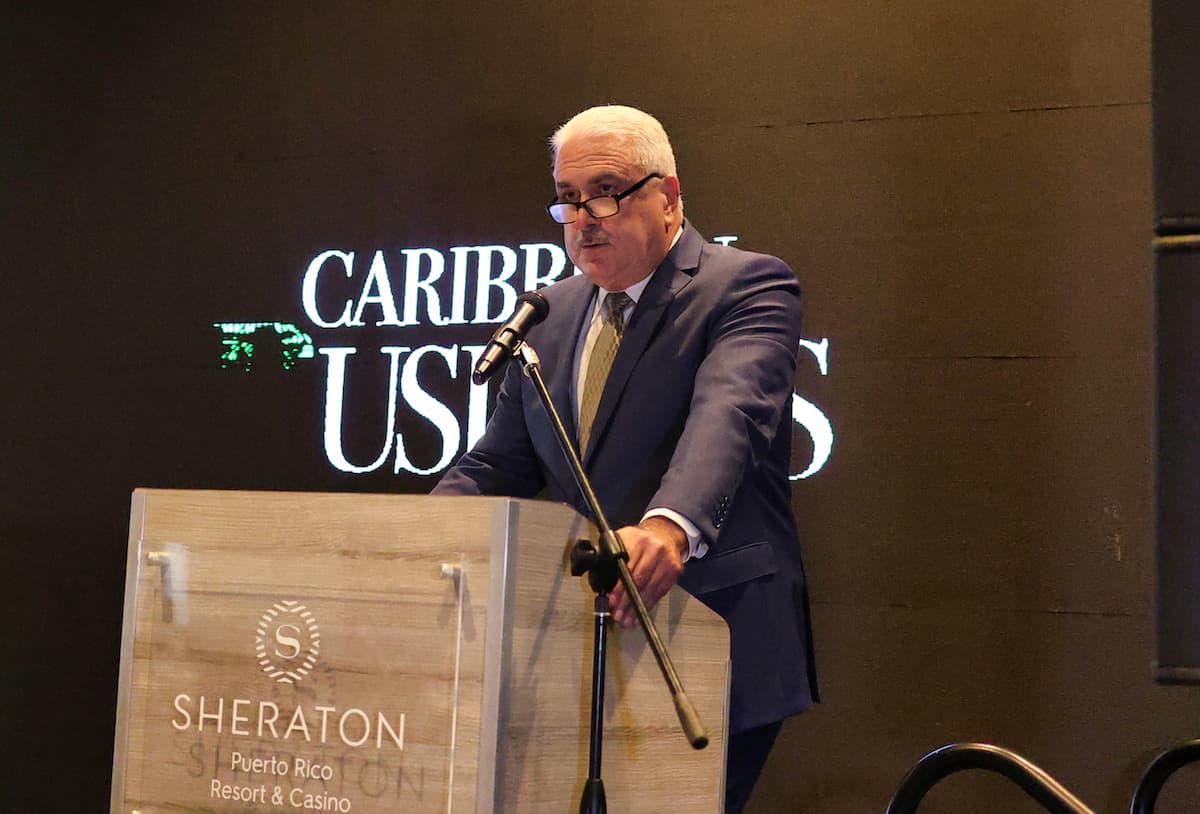
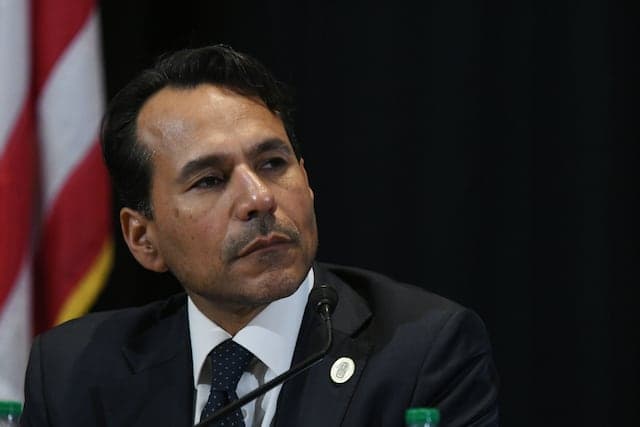
The Senate President argued that the current permit system allows for bureaucrats to make arbitrary decisions when evaluating permit applications
Despite public disagreements with the governor about her proposed permit reform, House Speaker, Carlos “Johnny” Méndez and Senate President Thomas Rivera Schatz both expect to accomplish permit reform by the end of the legislative session.
The speeches during the Caribbean Business Summit of Governor Jenniffer Gonzalez Colón, Méndez and Rivera Schatz centered around the problems of the current framework for building, land use and business operations permits of the island.
“We have a problem of uncertainty caused by a tangled web that the bureaucracy itself has woven over decades. Layer upon layer, without order, without coherence, and without a common purpose,” Rivera Schatz argued.
The recurrent criticisms of the current framework is that it’s convoluted, it holds excessive requirements and it takes too long, with some processes lasting as much as 540 days.While there seems to be agreement in the problems plaguing the current permitting regulations that spreads over 70 laws, the Governor, the legislative leaders are all pushing different bills.
The Senate president insisted that the need to improve the permit regulation is tied to the government’s efforts to incentivise investment in the island. One of the problems Rivera Schatz focused on is the ambiguity in the regulation that allows for agency bureaucrats to add on personal interpretations or arbitrary implementation of the regulation. Currently the Senate is considering SB 1173 and SB 1183.
SB 1173 was submitted by Rivera Schatz and substitutes the business operations permits for a registry in which the government would start oversight once a business is in operation but there would not be any permits needed to start operations. The latter one was presented by Gov. González, and is a broader bill that aims at streamlining processes and substituting the current Planning Board, among other entities for an Urban and Planning Board under the umbrella of the Department of Economic Development and Commerce (DDEC).
Rivera Schatz argued that these projects are complementary and Méndez argued that the Governor’s proposal in the House, HB 1213, is amendable. Méndez’s concern is that it gives too much power to the DDEC to then decide on the permitting regulation.
Criticism about the current proposal has also come from mayors, who are concerned that the permit reform would hinder municipal autonomy, and even from the governor’s own team. Planning Board President Héctor Morales Martínez criticized the bill during a legislative hearing. Morales said that eliminating the Planning Board would eliminate the structural foundations that come with the institutional capacity that the board has acquired in its over five decades of existence.
After her speech, Gov. González showed displeasure at Morales’ lack of support for the bill and told Metro indicated that she expects her cabinet to be politically aligned with her.
“He is clearly not aligned with reality and what the people of Puerto Rico want,” the governor told Metro about Morales.
For his part, the House Speaker said that the goal with the permit reform and an eventual tax reform is to reduce the government footprint in a way that would attract investment.
“I believe in the philosophy that the government needs to be much smaller than it is now. In recent years, the government payroll has been reduced, but not enough; it needs to be cut down much more,” Méndez said. “Simply because the one who creates capital in Puerto Rico is not the government sector.”